
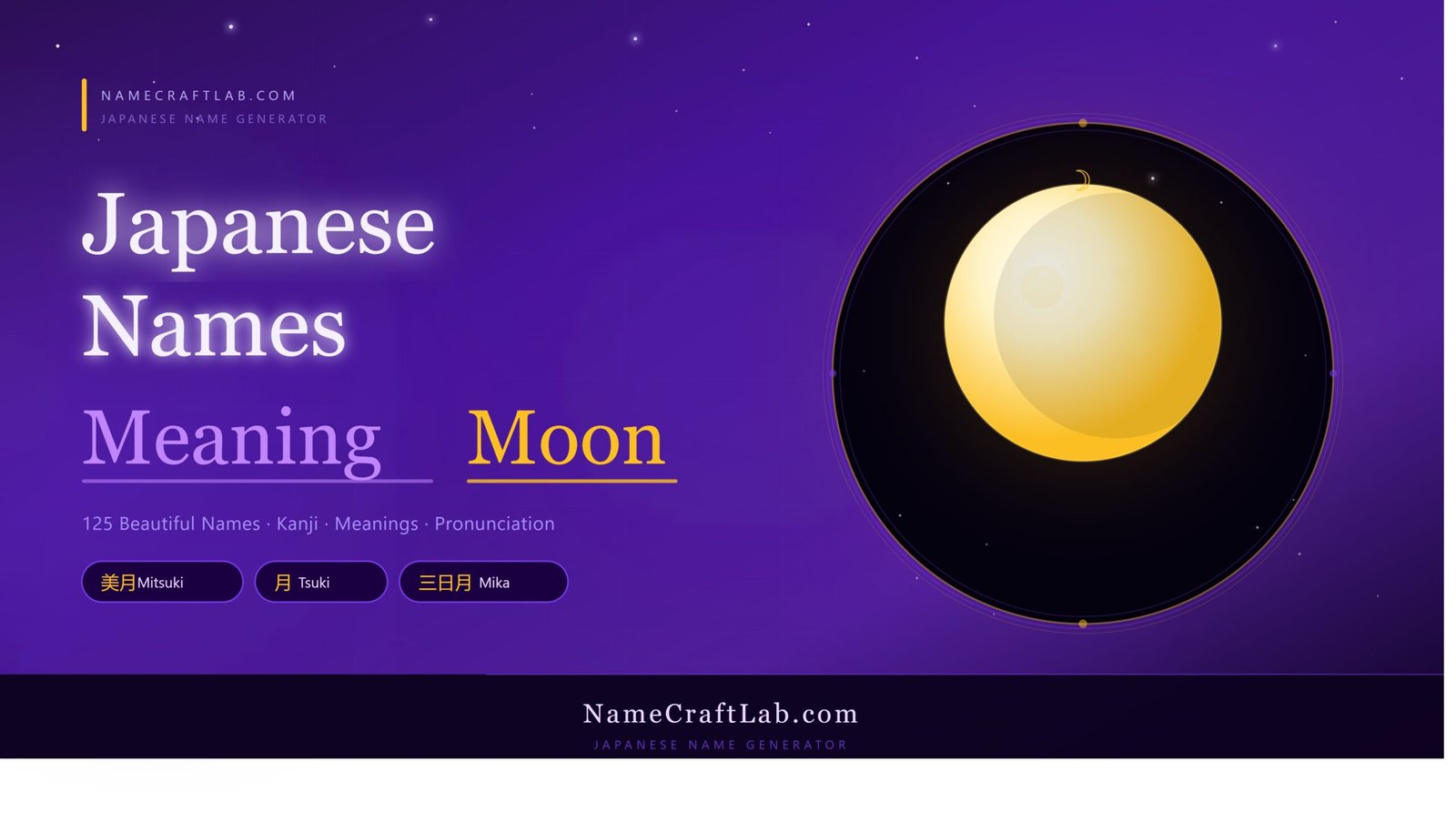
If you are looking for a name that feels timeless, poetic, and full of meaning, Japanese names meaning moon are hard to beat. The moon has inspired poets, painters, and parents across Japanese culture for thousands of years. Whether you need Japanese girl names, Japanese boy names, or gender-neutral names, this guide covers the most beautiful, meaningful, and popular Japanese names that mean moon — complete with kanji, readings, and the real stories behind each one.
Ready to find a name that means something?
Type a meaning, pick a style, and let the generator do the rest. It takes less than a minute.
What Does Moon Mean in Japanese?
The moon in Japanese is written as 月. This single kanji is one of the most widely used characters in Japanese names. Depending on context, 月 can be read as tsuki (the native Japanese reading) or getsu / gatsu (the Chinese-derived reading). So when someone asks what 月 means, the answer is simply: moon, in all its quiet beauty.
The character appears in ancient poetry, seasonal calendars, and countless names across Japanese first names and Japanese last names alike. It carries associations with calmness, reflection, and natural elegance — qualities parents have long wanted to pass on to their children.
Why Moon Names Hold Such Power in Japanese Culture
The Tale of the Bamboo Cutter, one of Japan’s oldest stories, tells of a girl named Kaguya-hime who descends from the moon. This celestial story planted moon symbolism deep in Japanese naming tradition. Even today, names inspired by the moon carry echoes of that magical Japanese heritage.
Beyond folklore, the moon governs seasonal festivals, moonlit gardens, and the ancient practice of tsukimi — moon viewing — where families gather to admire the full moon in autumn. A name rooted in this tradition is never just a name. It is a connection to something larger.
Japanese Girl Names That Mean Moon
These female names combine the kanji 月 with other beautiful characters to create layered, personal meanings.
Mitsuki — 美月
Mitsuki is one of the most popular Japanese names today. Written as 美月, it pairs 美 (beautiful) with 月 (moon), creating the meaning “beautiful moon.” The name is elegant, easy to pronounce, and beloved by parents who want something classic with warmth.
Mizuki — 美月 or 瑞月
Mizuki shares the same reading as Mitsuki in some kanji combinations but carries its own distinct feel. Depending on the kanji characters chosen, Mizuki can mean “beautiful moon,” “lucky moon,” or even “moonlight on water.” It consistently ranks among the most meaningful names for girls.
Tsukiko — 月子
Tsukiko is a traditional girl’s name that literally means “moon child.” The kanji 子 means child, and paired with 月, it creates a name that sounds gentle and poetic. Parents have loved Tsukiko for generations precisely because it never feels dated.
Yuzuki — 優月
Yuzuki blends 優 (kindness, grace) with 月 (moon). It is a name that suggests both inner beauty and lunar light — a moon for girls who will grow up to be gentle and strong. The yuu sound gives it a soft, modern edge while the 月 grounds it in tradition.
Hazuki — 葉月
Hazuki (葉月) is connected to the eighth month of the lunar calendar, when leaves begin to turn. The name captures seasonal beauty and the quiet change of the natural world. It is a unique Japanese name that feels both ancient Japanese in origin and perfectly wearable today.
Runa — ルナ
Runa draws from the Latin luna, meaning moon. Written in katakana, it has become one of the most popular Japanese names for girls who want a touch of the celestial alongside a modern sound. Runa sits naturally in both Japanese and international contexts.
Japanese Boy Names and Male Names Meaning Moon
Moon imagery is not only for girls. Japanese male names and Japanese boy names rooted in lunar symbolism carry strength, clarity, and vision.
Getsu — 月
Getsu is one of the most direct Japanese name that means moon. It uses the kanji 月 alone and projects quiet confidence. Simple, strong, and unmistakable.
Mikazuki — 三日月
Mikazuki means crescent moon. The crescent moon (三日月) represents potential, growth, and the start of something new. Among names that mean moon, Mikazuki stands out for its vivid imagery and striking sound. It is a name people remember.
Tsukimi — 月見
Tsukimi references the beloved moon-viewing festival. A child named Tsukimi carries the peace of a moonlit autumn evening with them always. It works as both a poetic given name and a meaningful cultural reference.
Unisex Names and Gender-Neutral Names
Many parents today prefer unisex names that feel open and flexible.
Tsuki — 月
“Tsuki” is perhaps the purest of all Japanese names that mean moon. It is the moon, nothing added. Its simplicity is its strength. Tsuki works equally well as a name that includes both modern sensibility and ancient roots, and it is growing in popularity worldwide as a truly gender-neutral names choice.
Yume Tsuki — 夢月
Yume means dream in Japanese, and paired with 月, it creates a name meaning “dream moon” — something that captures lunar light and imagination together. It is a magical Japanese name that writers especially love for characters with depth.
Understanding Kanji in Moon Names
One of the most fascinating aspects of Japanese naming is the flexibility of kanji. A single name can carry completely different meanings depending on the kanji combination chosen. For moon names, the most important kanjis include:
- 月 — Moon
- 美 — Beautiful
- 愛 — Love
- 望 — Hope
- 音 — Sound
- 香 — Fragrance
- 彦 — Prince
- 太 — Great
- 夜 — Night
Different kanji allow parents to shape a name around personal values. Someone who values hope might write a name with 望; someone who values love might choose 愛. This layering of meaning is part of what makes Japanese names so enduring.
What you now know that most readers don’t
- Tsuki 月 alone is a complete real Japanese name — not just a nickname or short form.
- Mitsuki and Mizuki sound alike but carry completely different meanings depending on the kanji chosen.
- Hazuki 葉月 holds a hidden story — it is tied to the eighth lunar month, perfect for an August baby.
- Mikazuki 三日月 — crescent moon — is the most powerful moon name for a fictional character with depth.
- Runa ルナ is the easiest moon name for non-Japanese speakers — beautiful in any language.
- Pairing 望 (hope) with 月 (moon) creates one of the rarest and most emotional Japanese name combinations.
- NameCraftLab lets you filter by kanji meaning — so you find your moon name, not just the most popular one.
What These Names Say About the Beauty of the Moon
Across all these names, from Mitsuki and Mizuki to Tsukiko, Yuzuki, Hazuki, Runa, Tsuki, and Mikazuki — one thing is consistent: the beauty of the moon is not decoration. It is meaning. Moonlight in Japanese names stands for calmness, wisdom, emotional depth, and celestial bodies beyond our reach that somehow still feel close.
Whether you are searching for a beautiful baby name, naming a story character, or simply exploring Japanese names meaning moon, these names offer something genuinely rare: they sound beautiful, carry real history, and mean something worth passing on.
FAQ
What Is the Most Beautiful Japanese Name That Means Moon?
Mitsuki (美月) is often considered one of the most beautiful Japanese names meaning moon. It combines the kanji 美 (beautiful) and 月 (moon), creating the meaning “beautiful moon.” Other popular moon-inspired names include Tsukiko, Mizuki, and Yuzuki, each with its own unique charm and symbolism.
How Do You Say and Write "Moon" in Japanese — and How Is It Used in Names?
The word moon in Japanese is written as 月 and is commonly read as Tsuki.
This kanji is widely used in Japanese names such as Mitsuki (美月), Tsukiko (月子), and Mikazuki (三日月). Because the moon symbolizes beauty, peace, and wisdom, it is a popular element in many Japanese names.
Can I give my baby a Japanese moon name if we are not Japanese?
Yes, absolutely — and many non-Japanese families around the world already do. Names carry meaning across cultures, and choosing a Japanese moon name because you love what it stands for is a genuine form of appreciation. If anything, knowing the kanji and the cultural story behind the name — like the Tale of the Bamboo Cutter or the Tsukimi moon-viewing tradition — makes the choice more meaningful, not less. Names like Runa ルナ and Tsuki 月 are particularly easy to carry in any language and culture.
What Is the Difference Between Mitsuki and Mizuki — Are They the Same Name?
No, Mitsuki and Mizuki are different Japanese names. While both may use moon-related kanji such as 月, they have different pronunciations and meanings depending on the kanji characters used. Mitsuki (美月) commonly means “beautiful moon,” while Mizuki can have meanings related to beauty, blessings, or moonlight based on its kanji combination.
Are Japanese moon names suitable for boys, or are they mostly for girls?
Moon names exist for everyone. While names like Mitsuki, Tsukiko, and Hazuki lean feminine in Japan, there are strong Japanese boy names rooted in lunar symbolism too, Mikazuki 三日月 (crescent moon), Getsu 月, and Harutsuki 春月 (spring moon) are genuinely used for boys. And names like Tsuki 月 are fully gender-neutral — used freely for both. Naming conventions in Japan are also shifting, with more families choosing moon names across genders without any hesitation.
